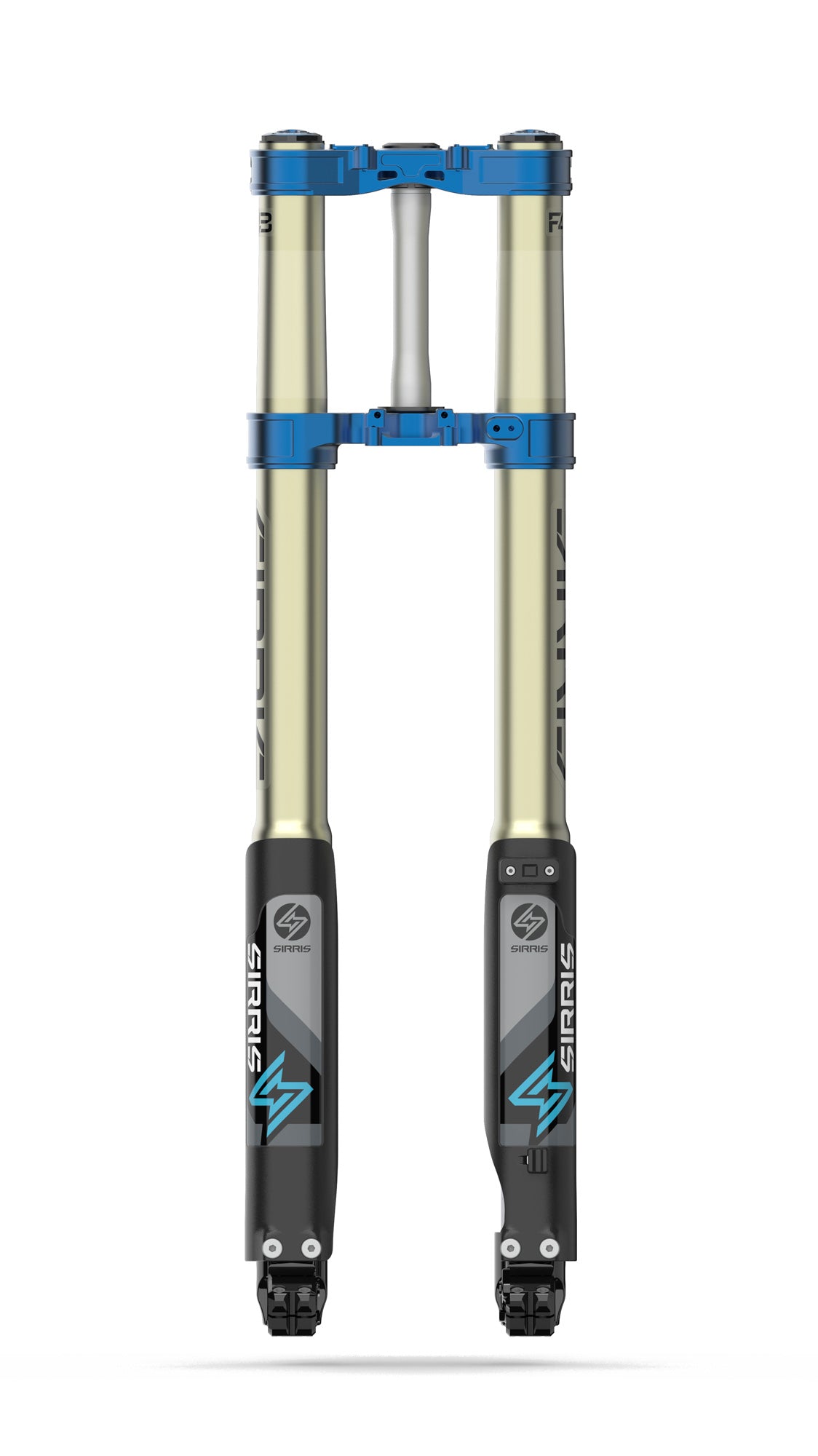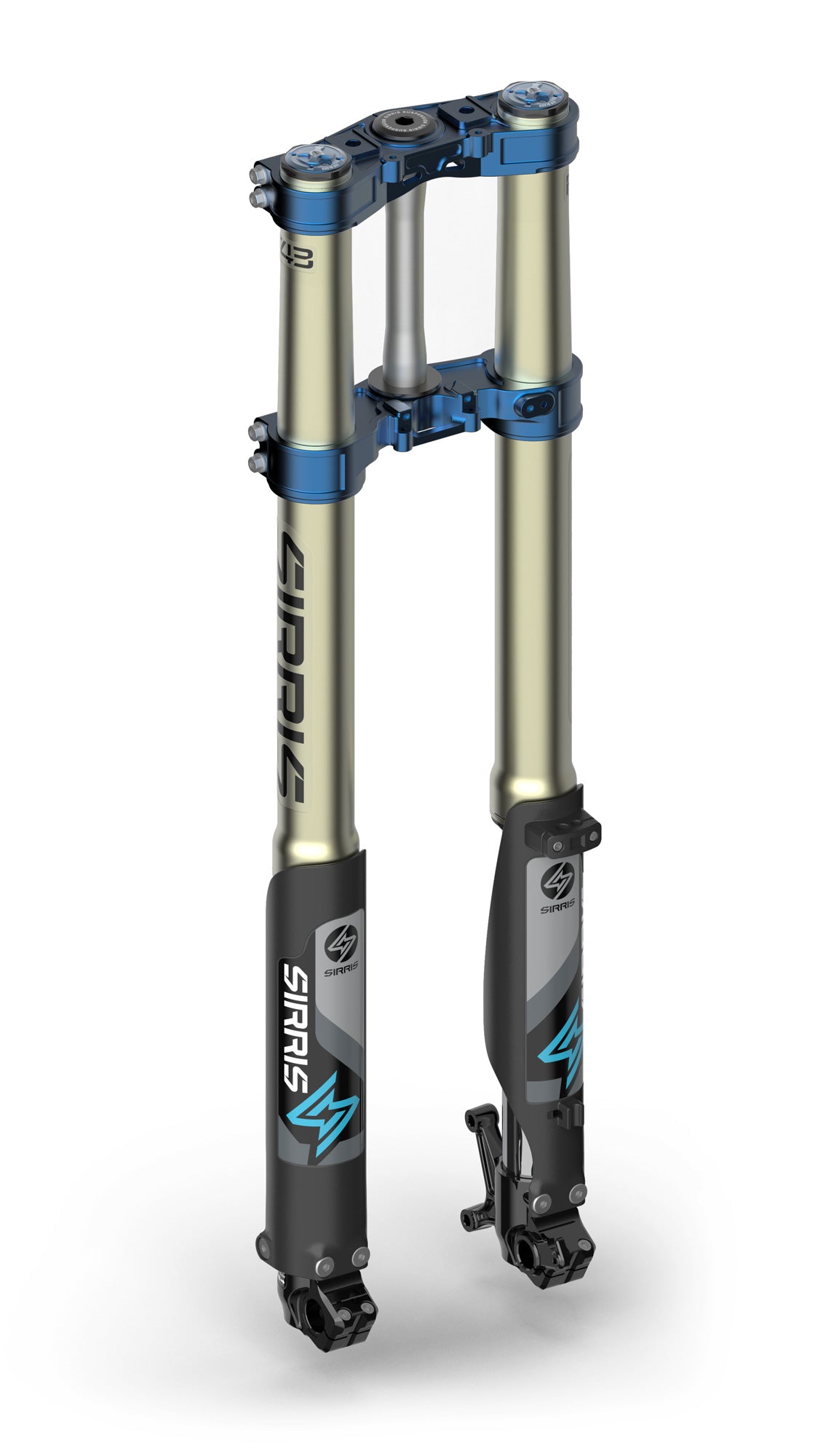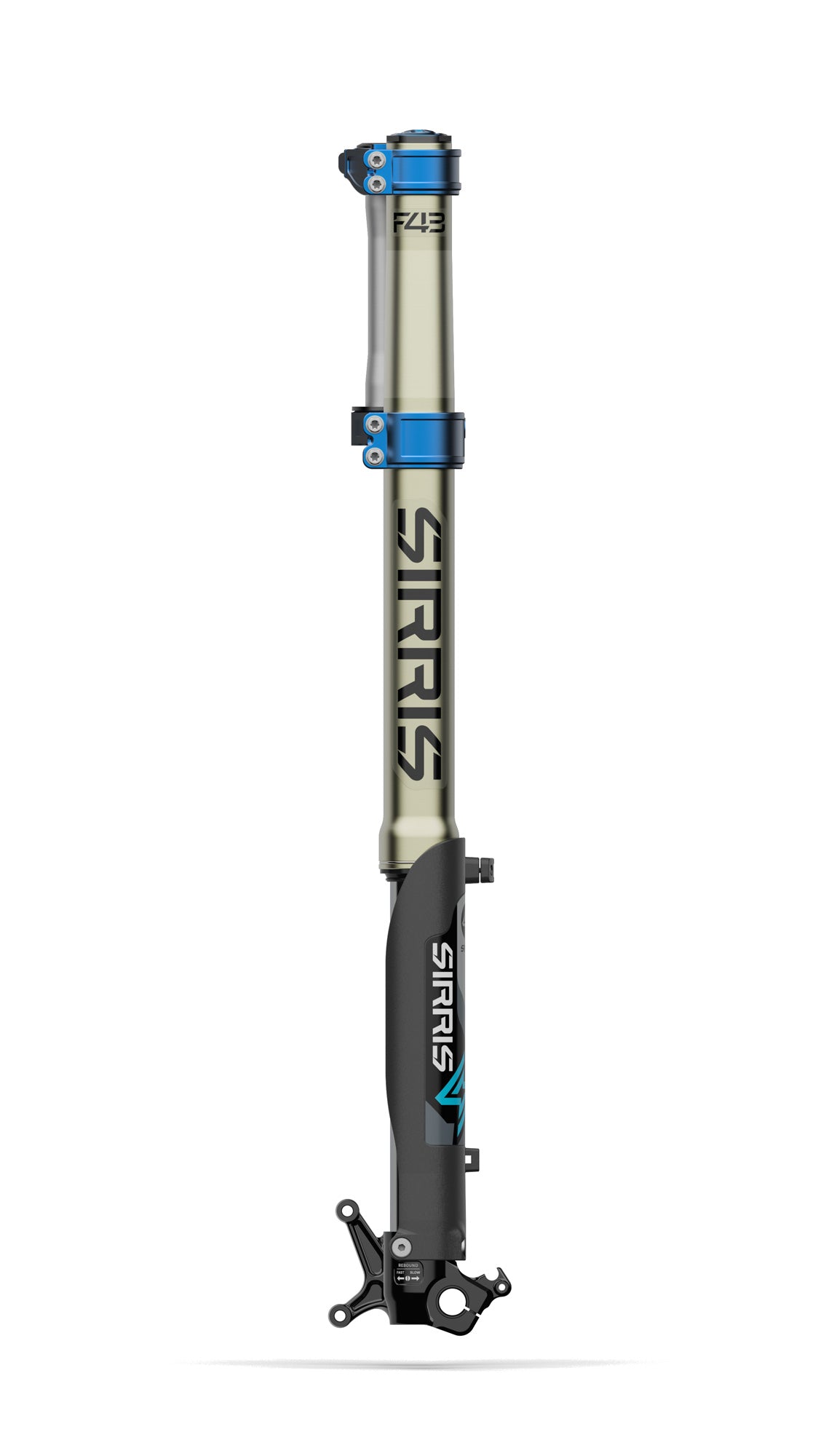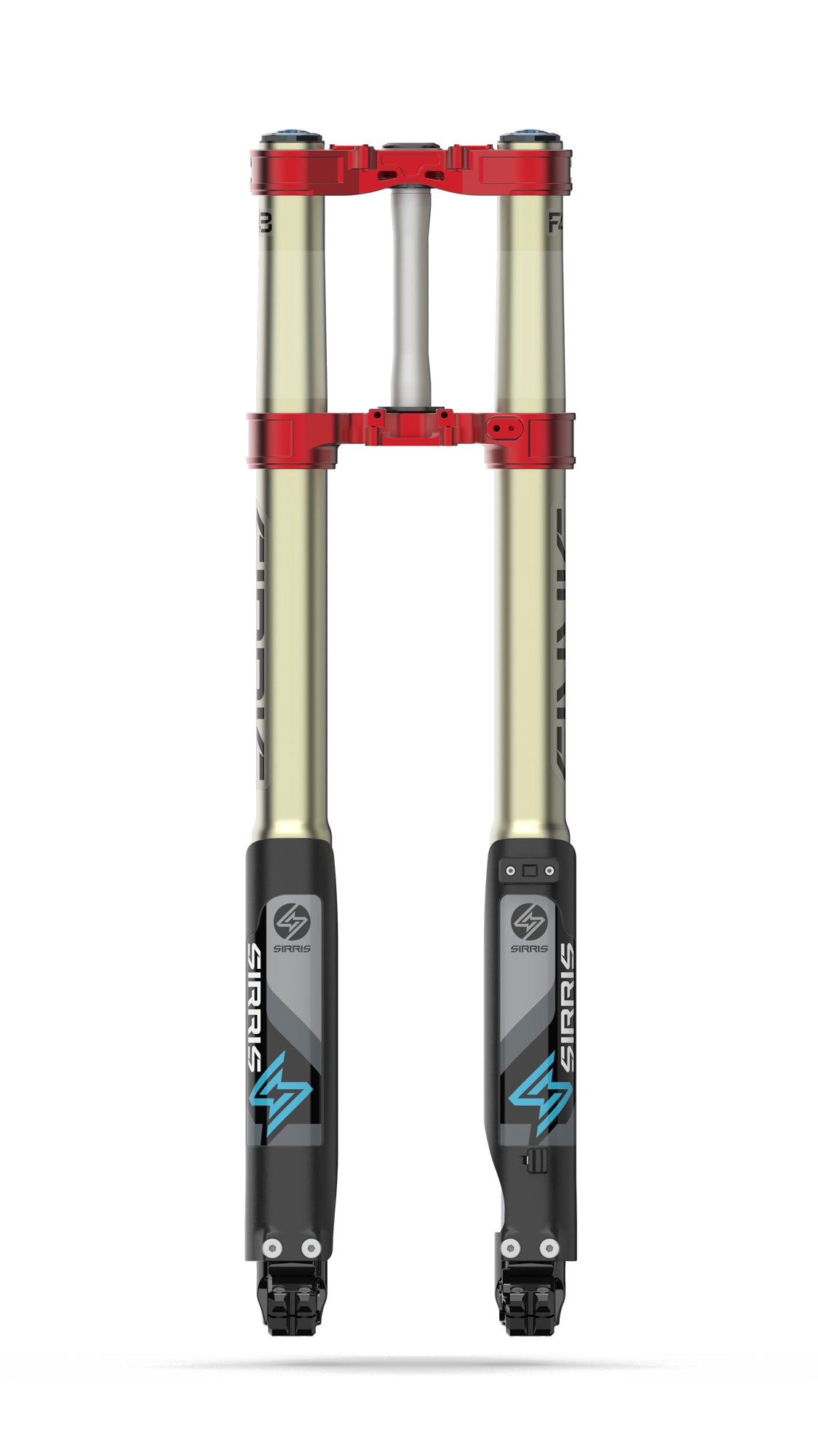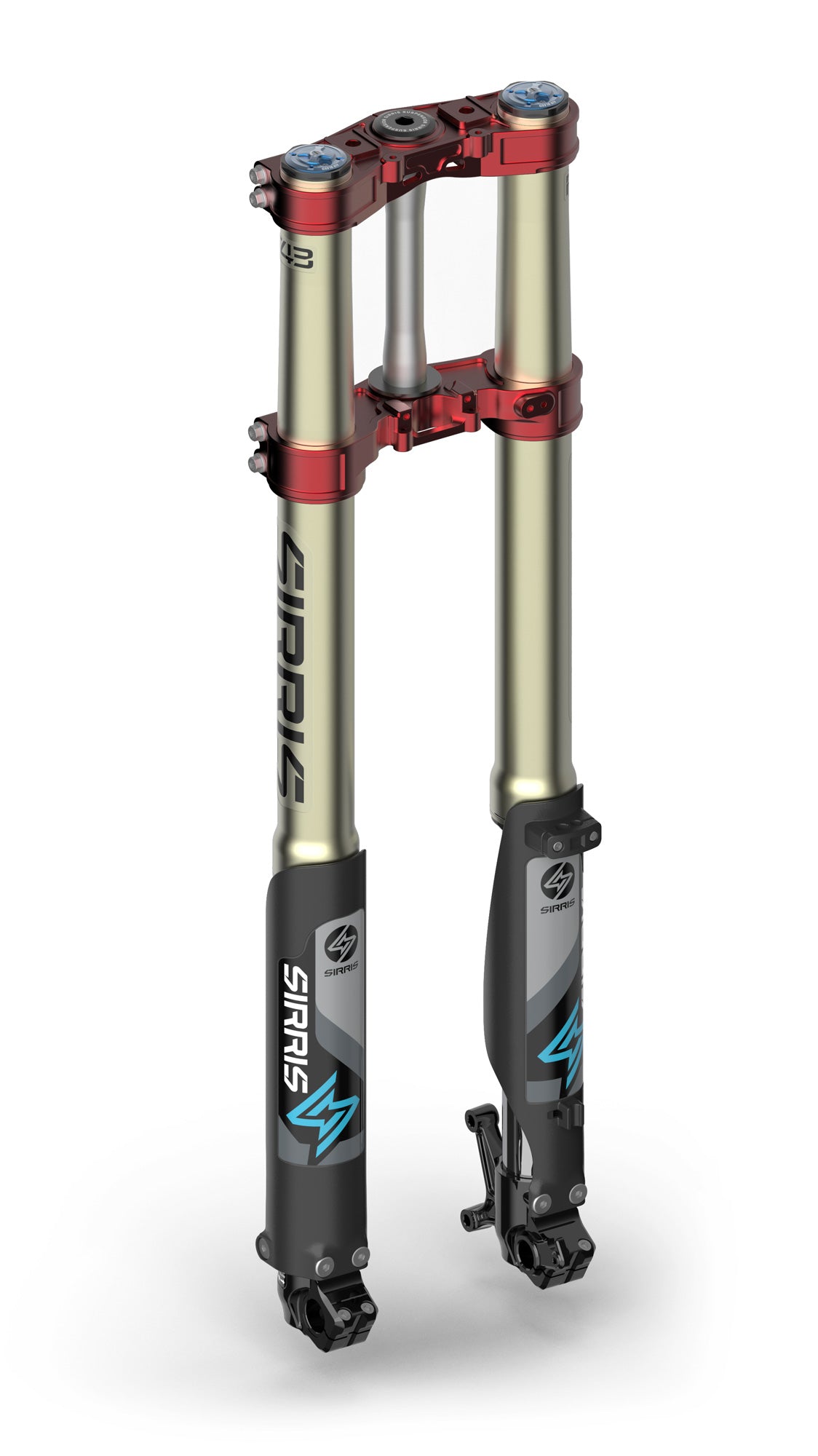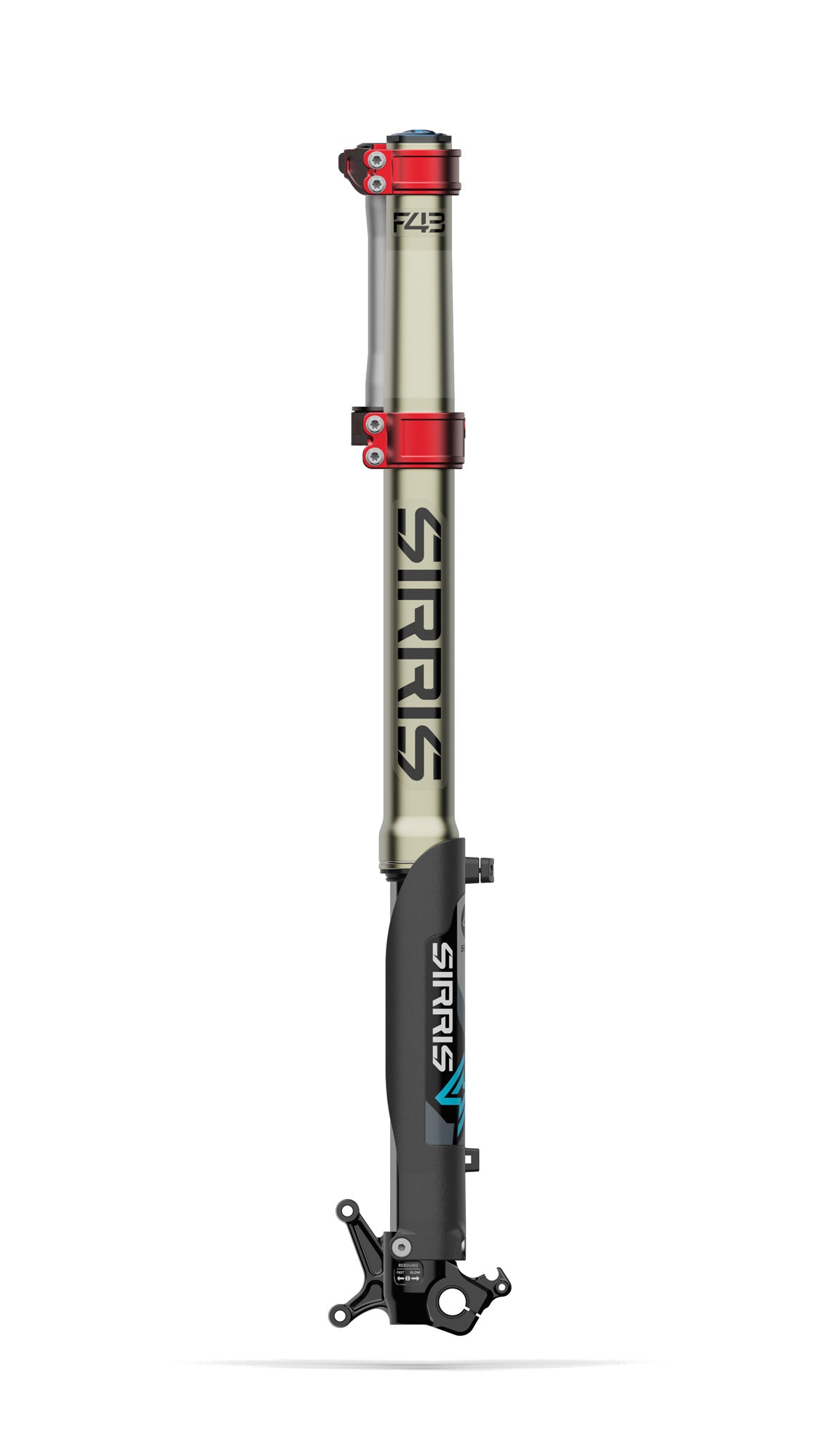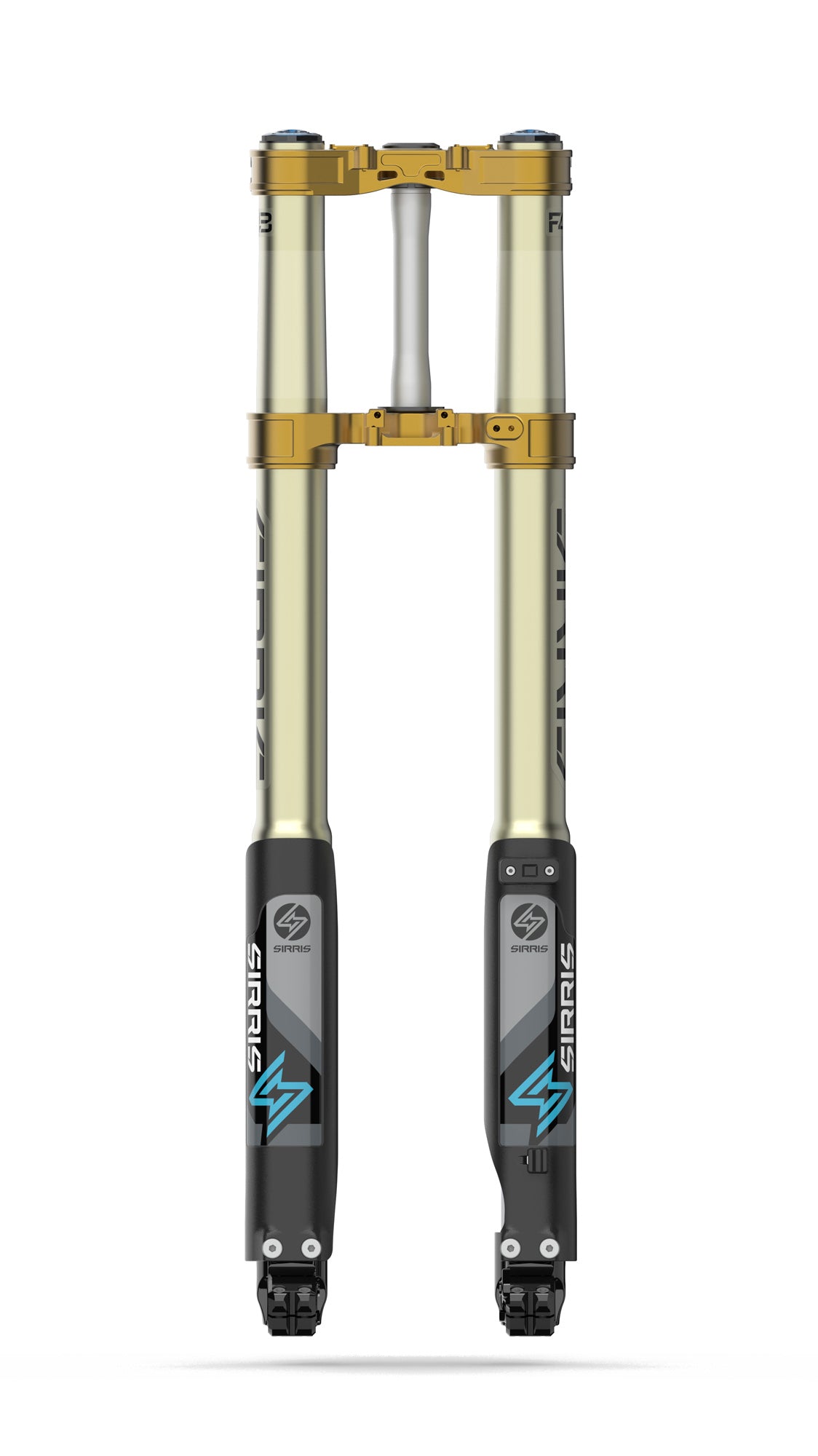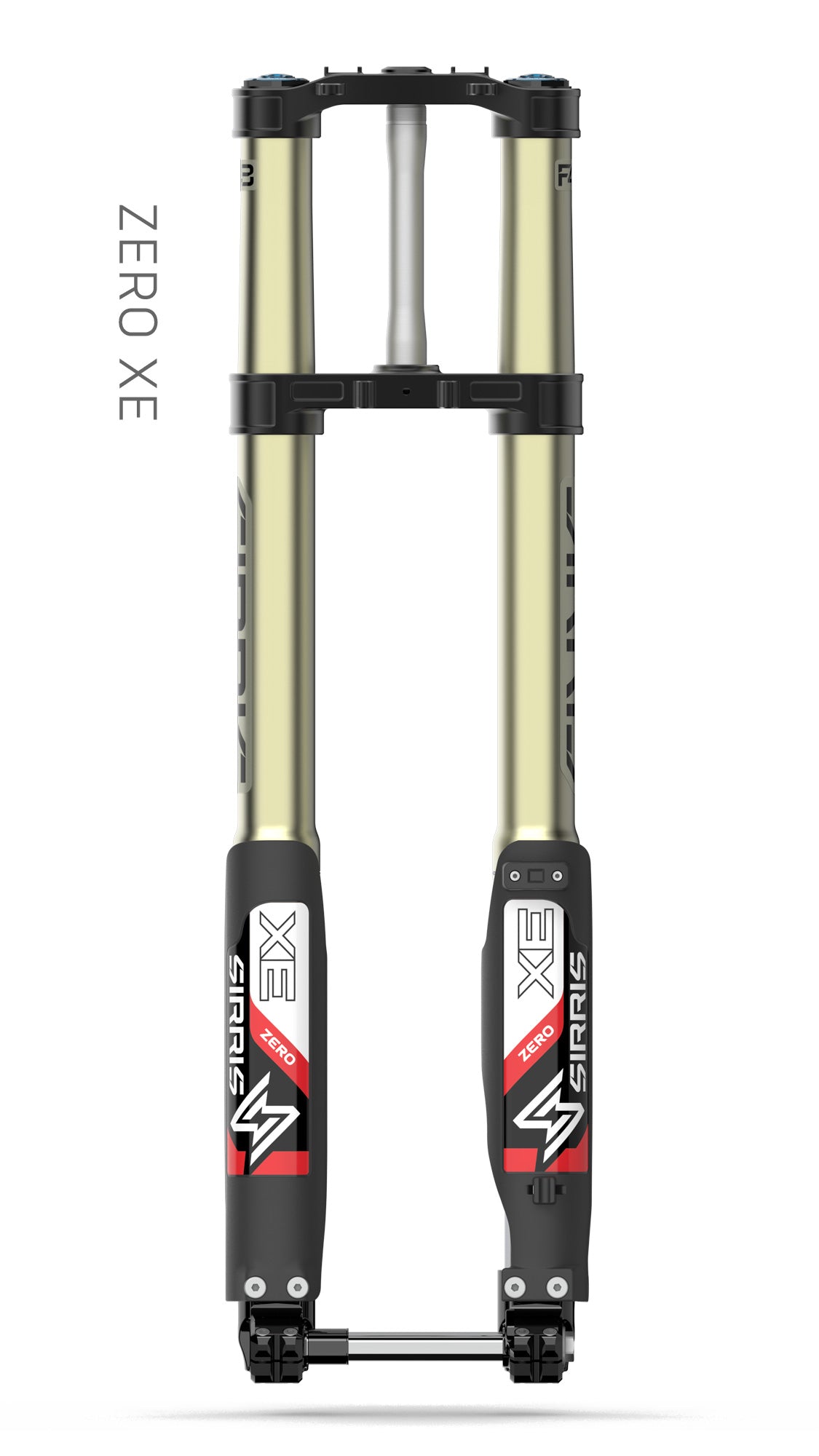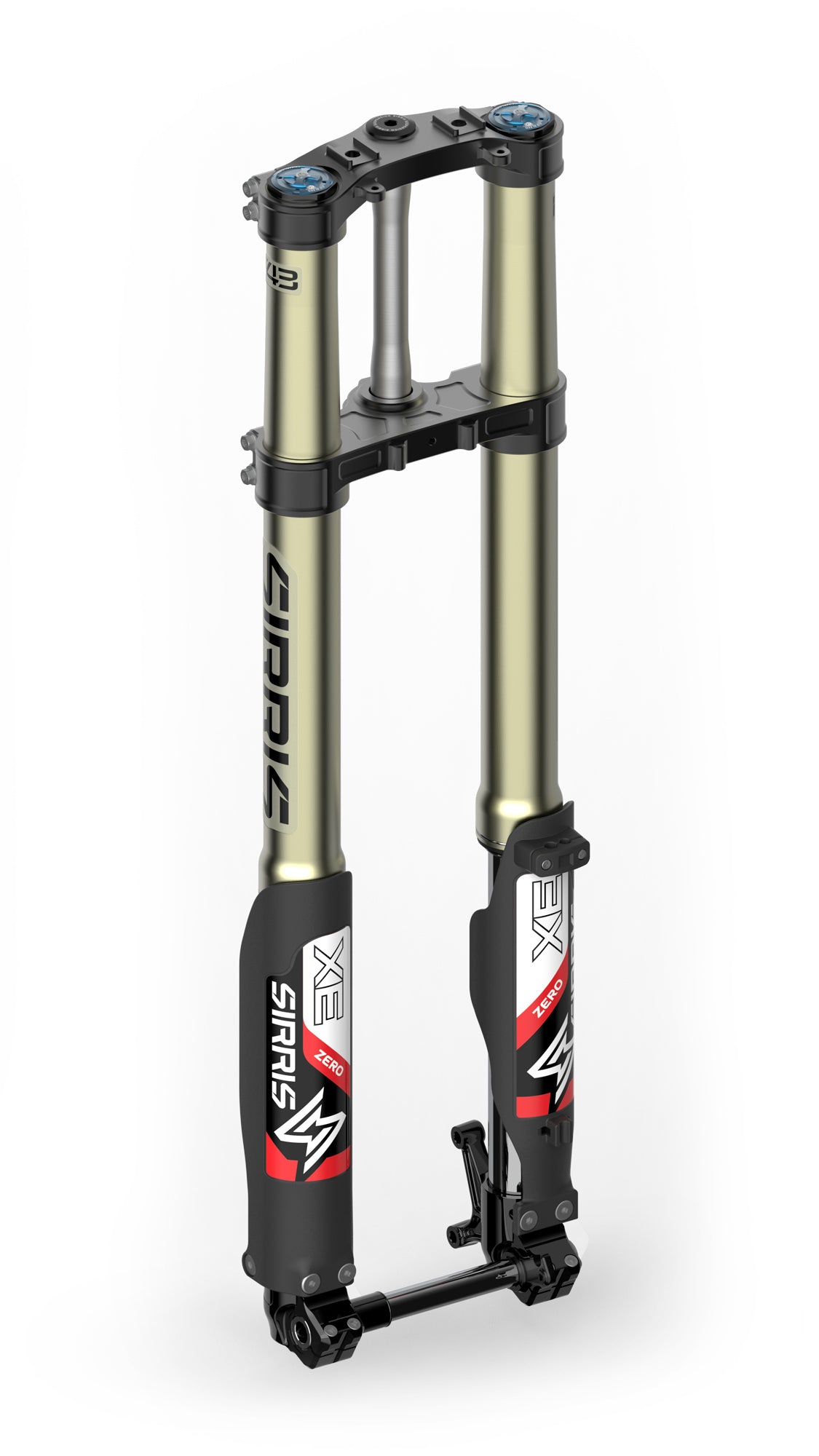



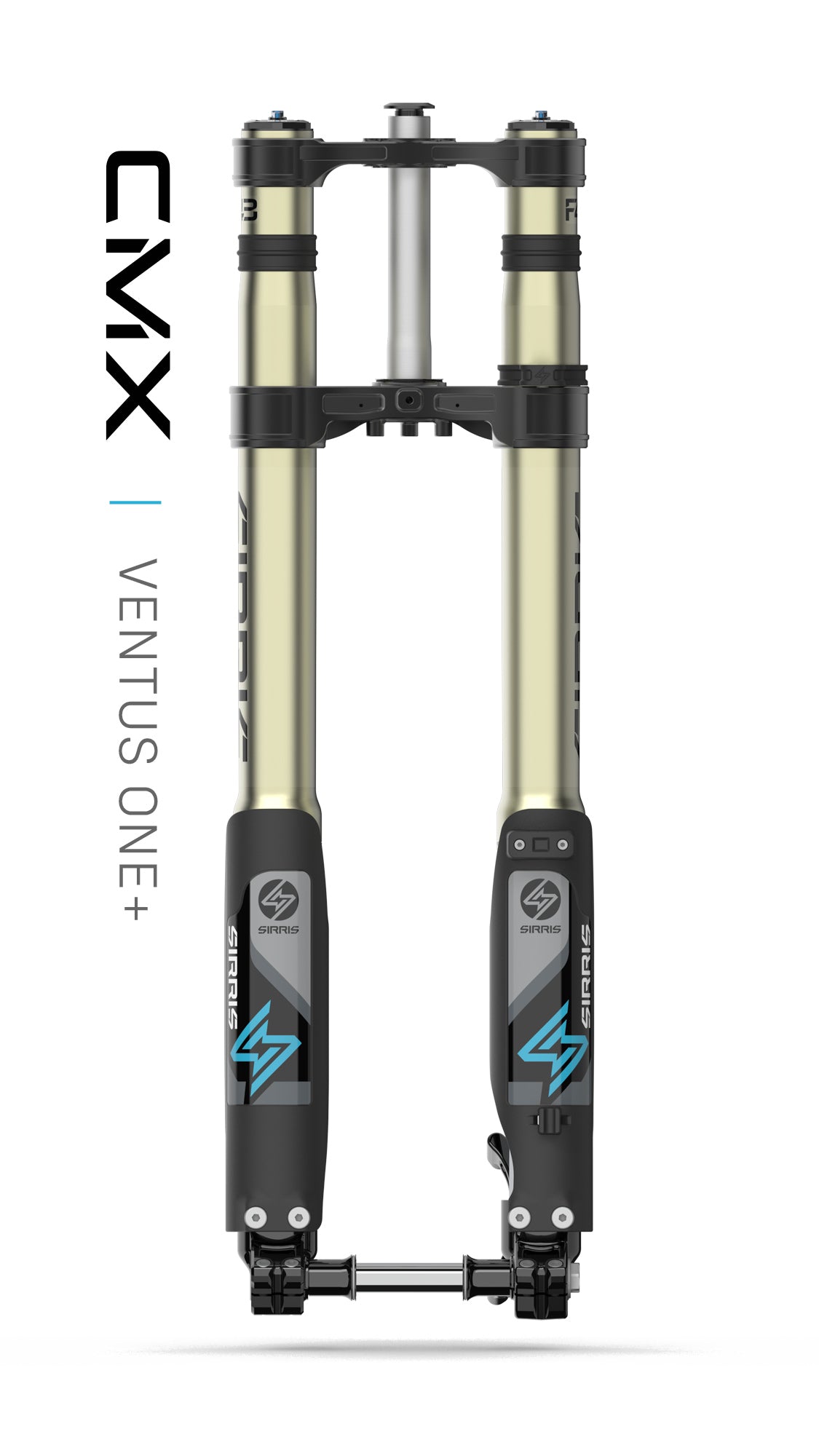
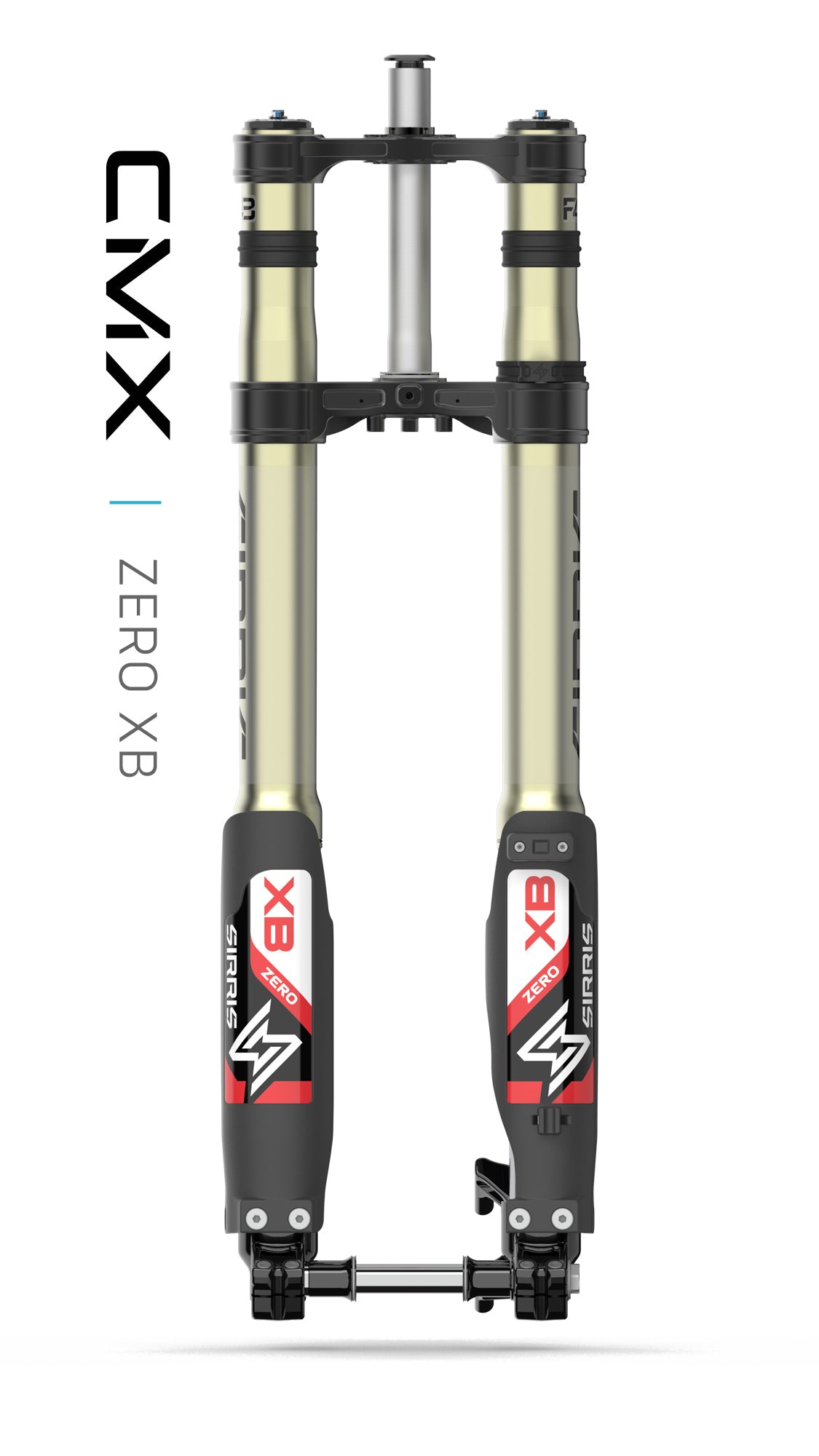
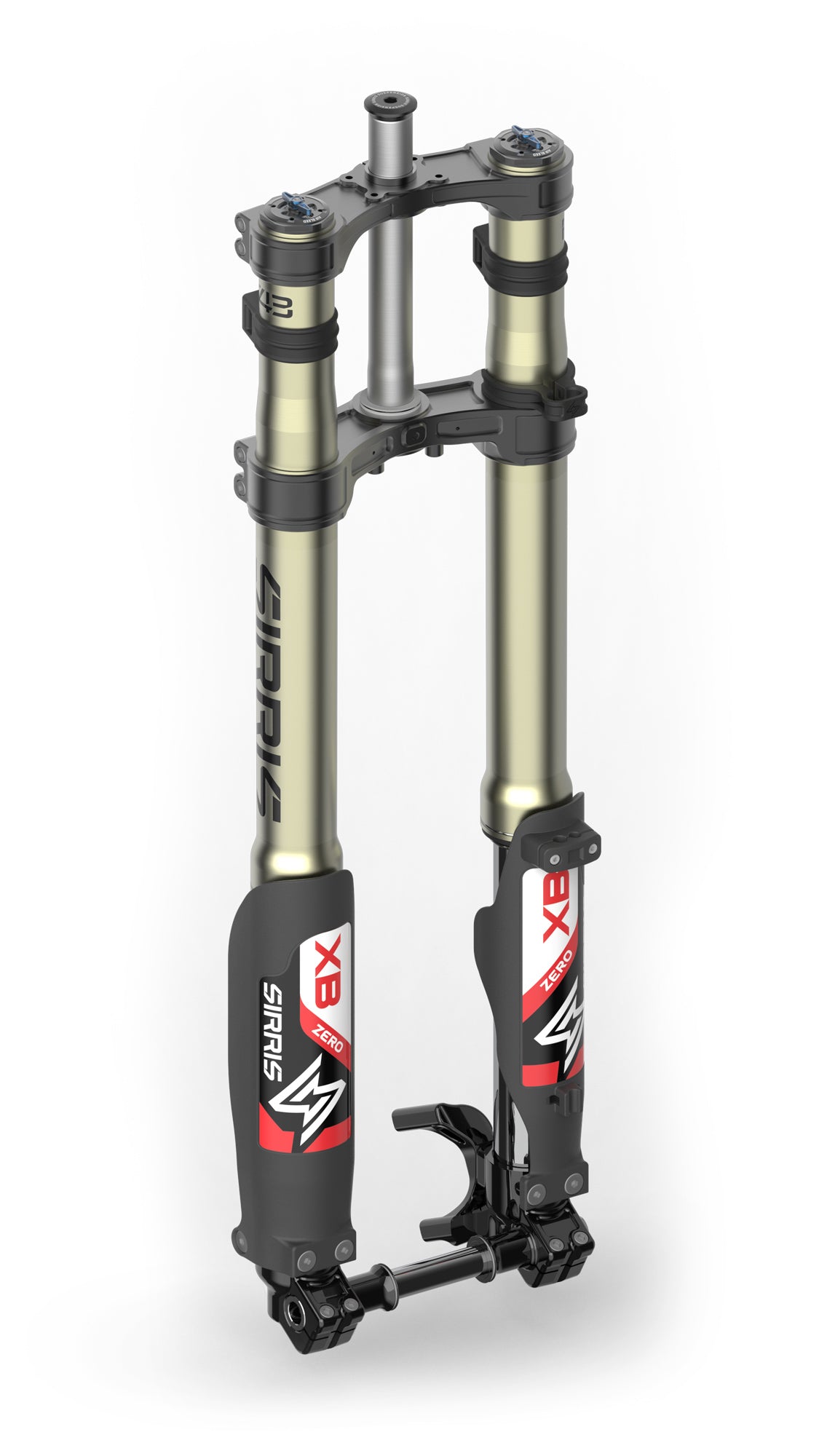
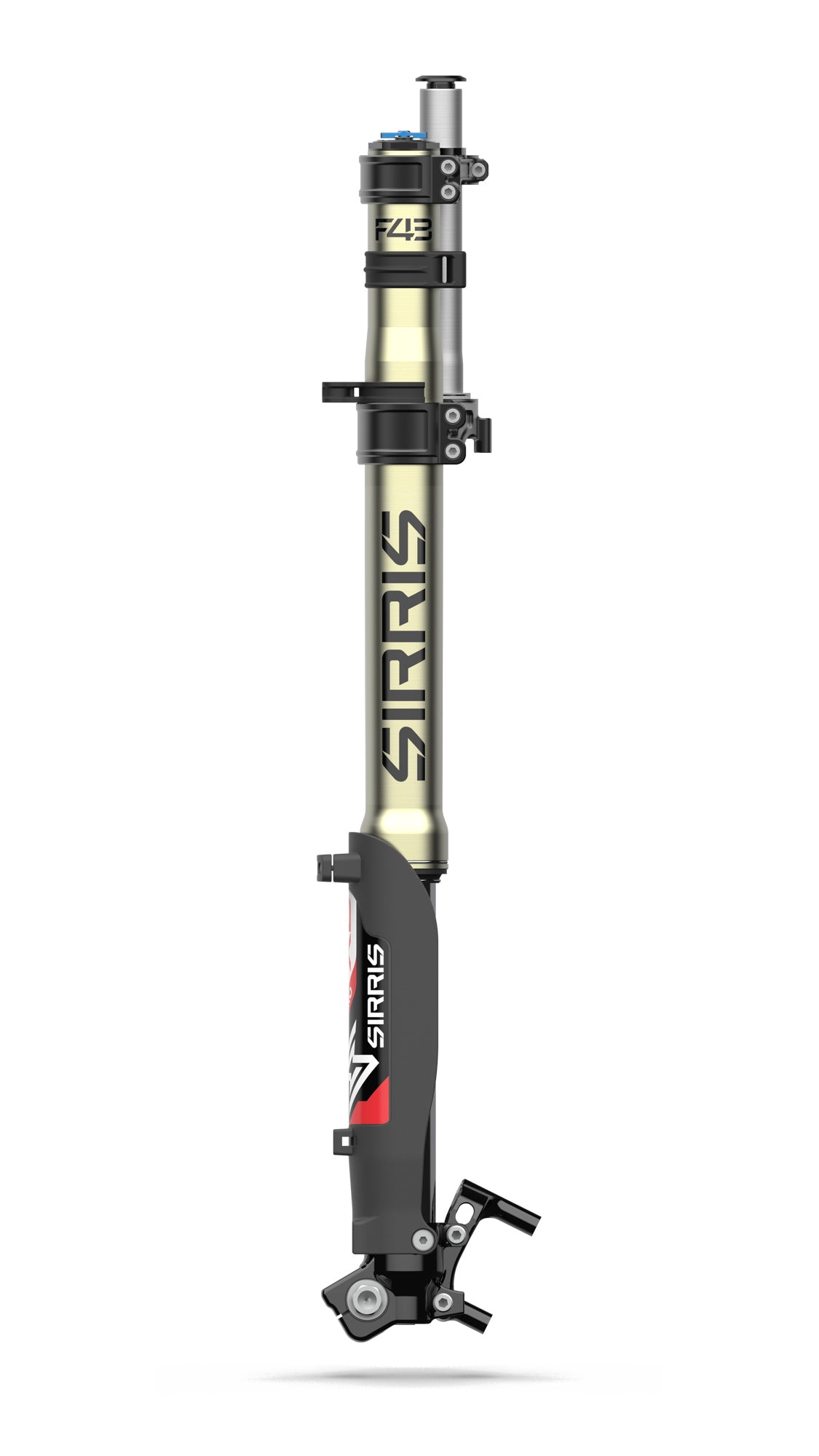



FORK BUSHING PLAY EXPLAINED
Does your fork knock or feel loose when you rock the bike?
If you think your fork has play, read below to learn what's happening.
The "knock" you feel when the bike is stationary is the fork's engineered bushing clearance. This clearance is intentional and disappears during riding as oil flows through the fork and lubricates the bushings.
Too little clearance can cause binding and poor lubrication, while too much reduces steering precision.
Because a bleed hole supplies oil between the inner and outer tubes, some play or "knock" may be noticeable when the bike is on a stand or when oil has drained away from the bushing surface.
Some competitors place the bleed hole differently to reduce this noise, but at the expense of lubrication. During normal riding, oil continuously lubricates the bushings, so play or noise should not be present unless the bushing clearance exceeds our specification.
BRIEFLY EXPLAINED
A small amount of play in your Sirris fork when the bike is on a stand (or rocking motion with front brake on) is normal. This is intentional bushing clearance, similar to the feel of a very slightly loose headset.
This clearance is necessary to prevent binding when the fork is under load while riding. On the trail, oil fills the gap and the fork performs smoothly, so this play is not noticeable.
If you feel movement while riding, the cause is usually something else (e.g. headset, axle, or wheel bearings). Bushing wear must be significant before it can be felt in use.is normal. This is intentional bushing clearance, similar to the feel of a very slightly loose headset.
This clearance is necessary to prevent binding when the fork is under load while riding. On the trail, oil fills the gap and the fork performs smoothly, so this play is not noticeable.
If you feel movement while riding, the cause is usually something else (e.g. headset, axle, or wheel bearings). Bushing wear must be significant before it can be felt in use.
An in-depth look
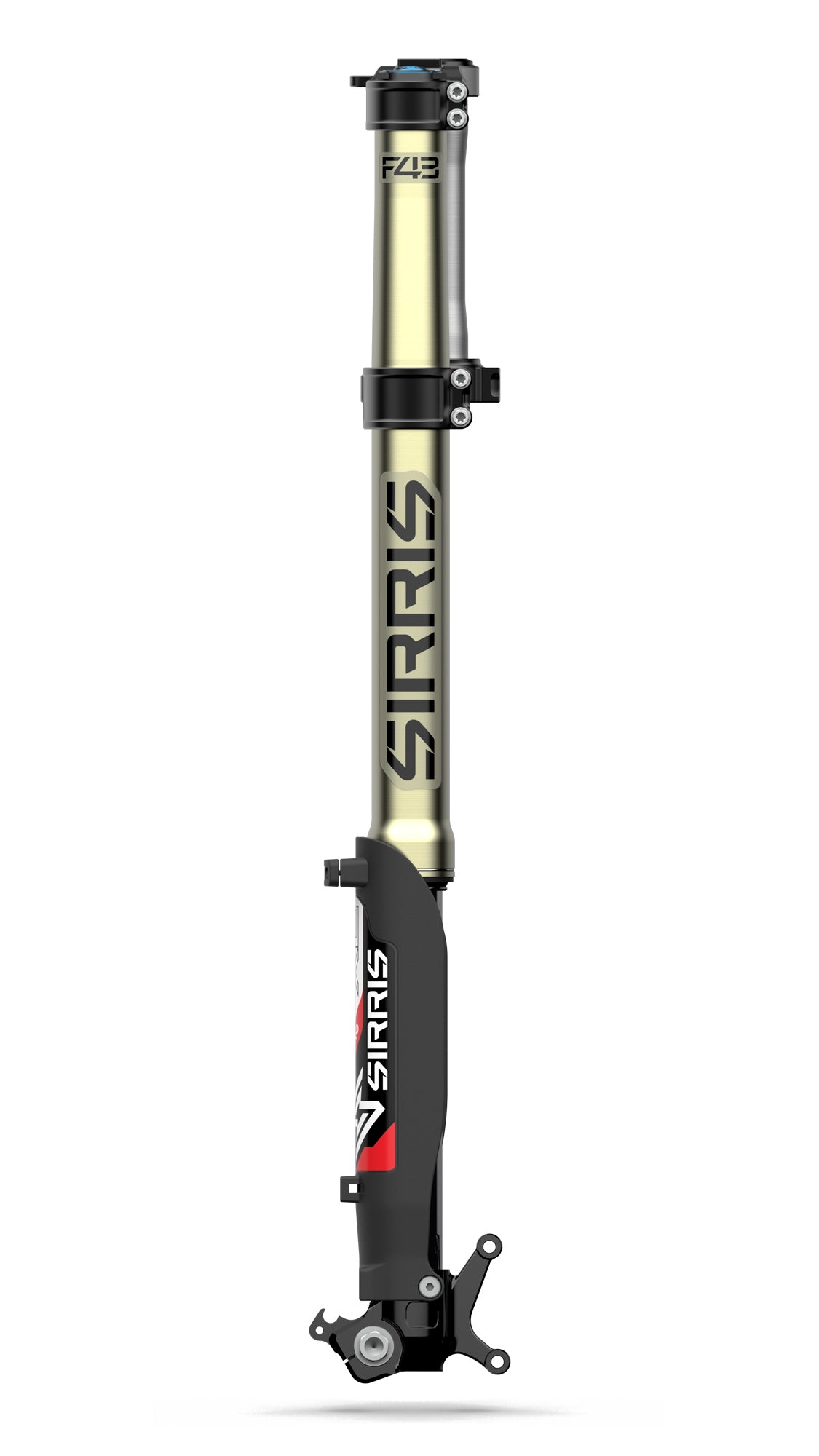
Sirris forks use PTFE-coated steel bushings with a carefully engineered clearance (“bushing gap”) between the inner and outer tubes. When your bike is on a stand, you may feel a very slight amount of play—similar to a lightly loose headset. This is normal and intentional.
This small amount of clearance is critical to performance. Under riding conditions, the fork is subjected to significant loads and slight flex (elastic deformation). The designed gap prevents the fork from binding in these situations, allowing it to move freely and track smoothly over terrain. This design follows proven practices from high-performance combustion motorcycles and uses the same suppliers trusted by leading manufacturers.
If the bushing gap were tighter, the fork would feel harsher and less compliant under load. Using tighter-fitting polymer bushings (common in bicycles) would also reduce durability in demanding conditions.
Why it feels different on a stand (or rocking motion with front brake on) vs. riding — When the bike is on a stand, oil inside the fork settles toward the bottom, making the bushing clearance easier to feel by hand.
When riding, oil is distributed throughout the fork and fills that gap, creating a smooth sliding interface allowing the bushing to slide as designed. In this state, the fork performs as intended and the bushing play is not noticeable.
Bushing lifespan — Sirris bushings are designed for durability and typically last around 100 hours of riding before excessive wear develops. Actual lifespan will vary depending on riding conditions and severity of use.
Important: Don’t confuse normal play with other issues
It’s common for riders to notice this small amount of play on a stand and assume it’s related to a different sensation while riding. In many cases, the real issue comes from elsewhere on the bike, such as:
- Loose steering bearings
- Loose axle
- Loose or worn wheel bearings
- Battery or component movement
Keep in mind that bushing wear must be significant before it can be felt while riding. The slight play you feel on a stand is a normal part of a high-performance fork design.
Before replacing bushings, be sure to check for other possible sources of movement so you don’t end up chasing the wrong problem.
How the system works
While riding
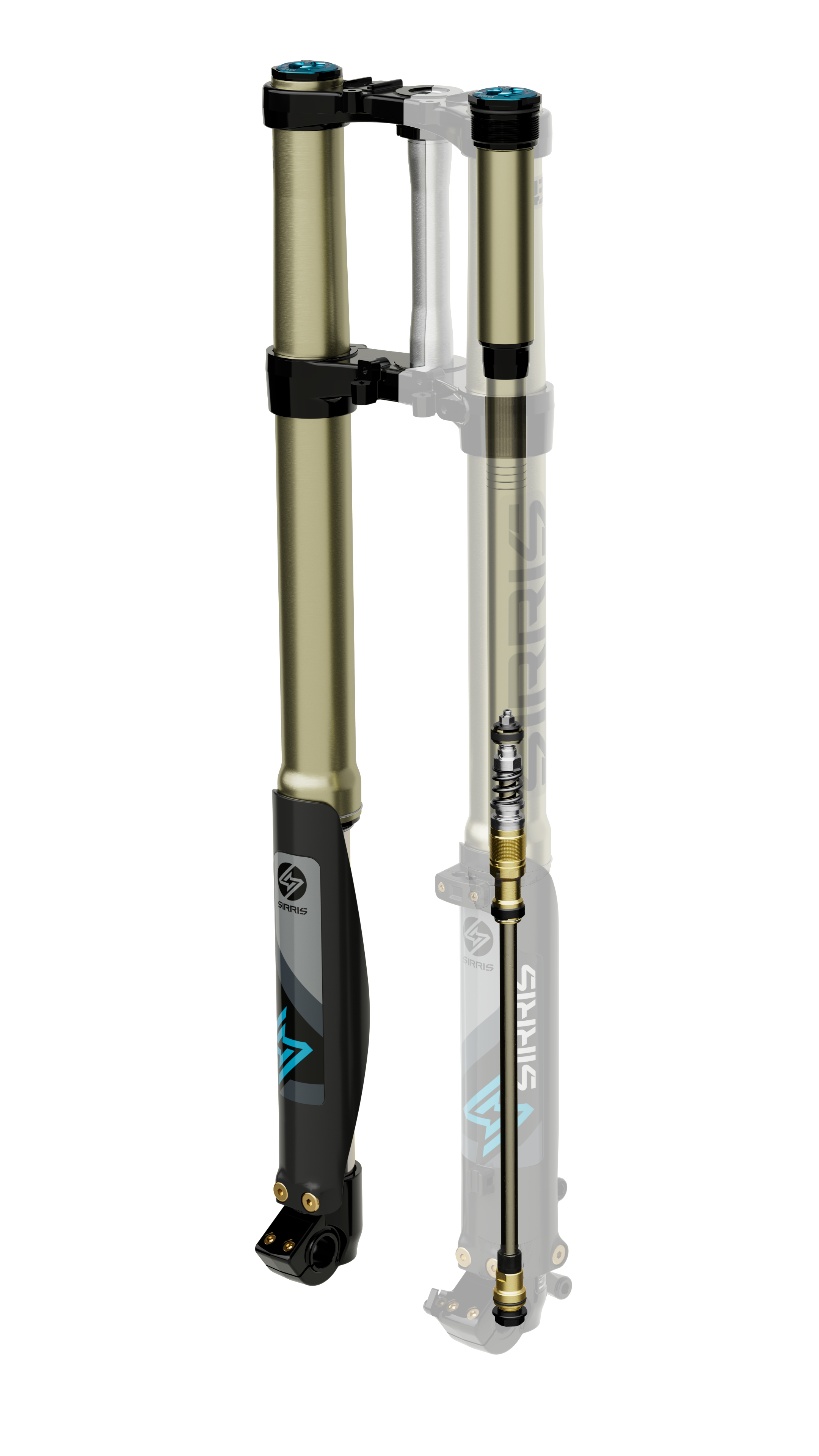
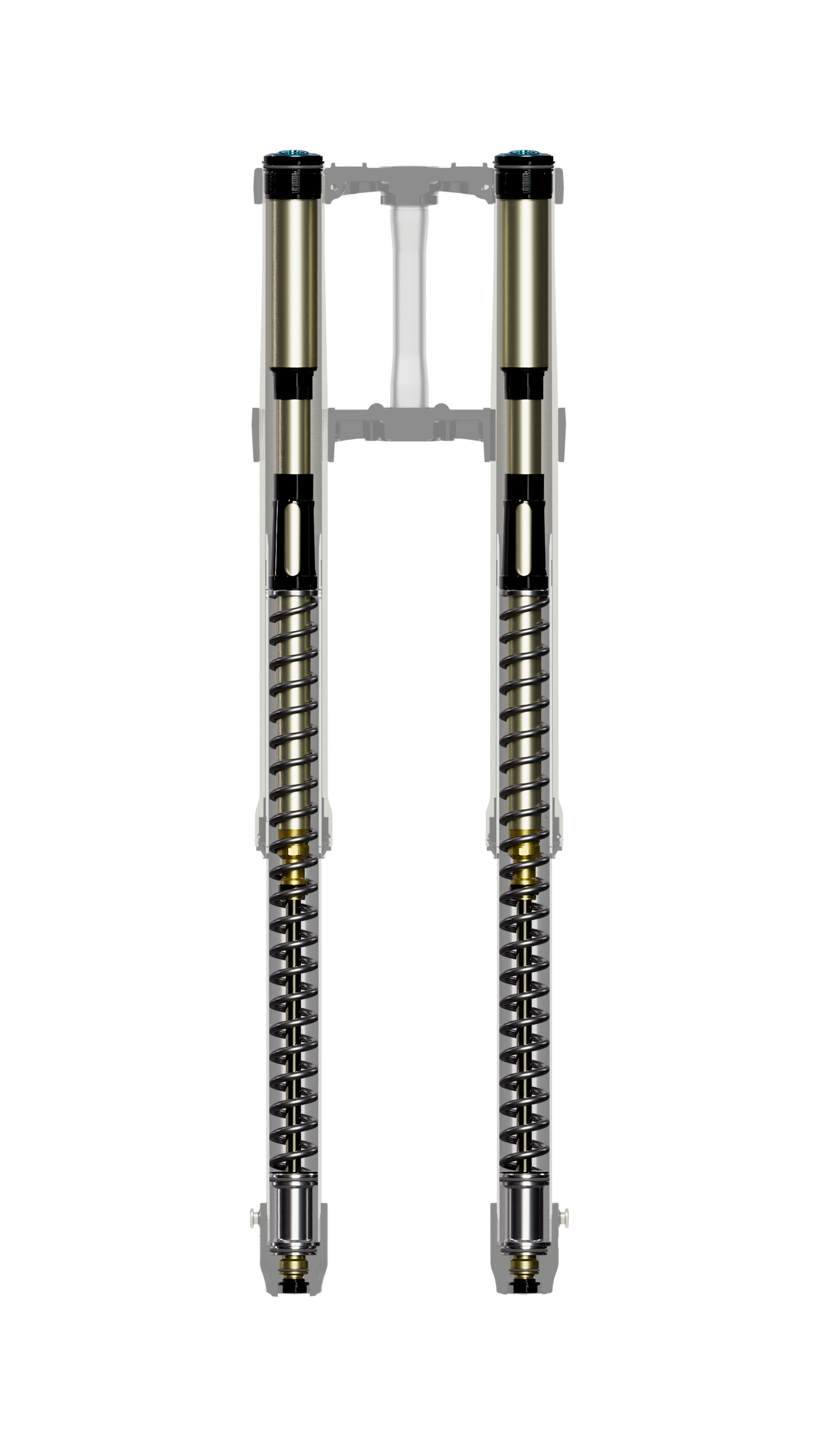
As the fork moves, oil is continuously pumped to the upper bushing and into the space between the upper and lower bushings. Excess oil drains back through a lower port, creating a constant circulation that keeps the bushings supplied with fresh oil.
This oil forms a thin, load-bearing film between the bushings and tubes. Combined with the engineered bushing clearance, it reduces friction, prevents binding, and delivers smooth, consistent suspension performance.
When the bike is stationary
Once the fork stops moving, oil is no longer pumped to the bushings. Gravity gradually drains the oil back into the lower fork, leaving only the designed bushing clearance. At this point, you may notice slight movement or a knocking sound when rocking the bike. This is normal and disappears once oil is circulating again during riding.
FAQ
DETAILED ANSWERS TO COMMON QUESTIONS:
Why doesn't the fork always keep the bushings submerged in oil?
The bath oil level is carefully tuned for performance and durability. Too much oil can reduce performance and damage seals. Like an engine, the fork relies on continuous oil circulation—not simply a high oil level—to provide lubrication and maintain a protective oil film.
Why does one fork leg feel looser than the other?
Small manufacturing tolerances across all components can create slight differences in perceived play between fork legs. During riding, the circulating oil fills these clearances, making the difference effectively disappear.
How do I know if there is too much play?
A precise measurement requires specialized equipment. The simplest check is to ride the bike. If you can consistently feel or hear play while riding, the fork should be serviced. Under normal conditions, the designed clearance is difficult to detect while riding and only becomes noticeable after significant wear.
My new (or low-mileage) fork seems to have excessive play.
If you notice knocking while riding, first check for other common sources of movement:
- Battery movement (e-bikes)
- Loose or worn headset bearings
- Headset cups moving in the frame
- Loose or incorrectly installed front axle
- Worn front wheel bearings
- Brake pad or floating rotor movement when the front brake is applied
These issues are often mistaken for fork bushing play.
My other bikes don't do this. Why?
Most performance suspension forks use similar bushing designs, but manufacturers use different oil flow strategies. Some designs minimize perceived play when the bike is stationary by reducing oil flow to the bushings. Sirris prioritizes continuous lubrication, durability, and on-trail performance, even if that means slight play or knocking may be noticeable when the bike is not being ridden.

UNLOCK YOUR BIKE'S POTENTIAL
A NEW ERA IN E-MOTO SUSPENSION PERFORMANCE IS HERE